Okay, so you’ve got this adorable fluffball at home, right? You’re living the dream! Until—BAM!—those puppy teeth start gnawing on your hands like you’re a big ol’ chew toy. Wolrd’s cutest vampire, honestly. If you’re pulling your hair out wondering how to teach your puppy not to bite, trust me, you’re not the only one. Puppies are bitey. But don’t freak—this is actually normal puppy stuff. In fact, it’s a key part of learning about their new world! Let’s chat about how to teach your puppy not to bite, why pups do it, and my tried-and-true plan to curb the chomp—all with zero stress.
Why Do Puppies Bite Anyway?
First up, puppies bite for a ton of reasons. It ain’t personal. They’re just little land sharks by nature! Here’s a quick run down of why your pup is OBSESSED with nibbling anything they can get their paws on:
- Teething pain: Those tiny teeth are coming in hot. Gnawing relieves discomfort.
- Exploring the world: Dogs use their mouths like we use our hands. Everything gets a taste test.
- Playing: Bitey wrestling is how puppies play with littermates…and you too!
- Hunger/thirst: Sometimes it’s as simple as being thirsty or hungry.
- Lack of impulse control: Puppies are like toddlers—totally raw and unfiltered!
But, hey, even if it’s “normal,” that doesn’t mean you have to just live with it! Let’s tackle how to teach your puppy not to bite with steps that actually work.

When Should You Start Training?
If you’re asking how to teach your puppy not to bite, I salute your timing—they’re never too young to start! The earlier, the better, but even older puppies (and let’s face it, some adult dogs) can be taught. Ideally, though, begin as soon as you see those sharp teeth chomping on your fingers.
How to Teach Your Puppy Not to Bite: Step-by-Step Guide
Ready to get serious? I’ve got a whole toolkit of methods here, so your hands can stop looking like they went 12 rounds with Edward Scissorhands. Here’s how to teach your puppy not to bite in easy steps.
1. Use the “Ouch!” Method (Puppy Yelping)
- Puppies learn to play gentle by wrestling with other pups. When one bites too hard, the other yelps and play stops.
- So, when your puppy bites, let out a high-pitched “Ouch!” or “Eek!” and freeze.
- Stop play for a brief moment. This mimics what happens in doggy playgroups.
- If they back off, praise (and maybe treat) your pup.
This is a prime tactic in how to teach your puppy not to bite, ’cause it taps right into their natural instincts. Don’t overdo the yelp though—drama-llamas need not apply.
2. Substitute Toys for Skin
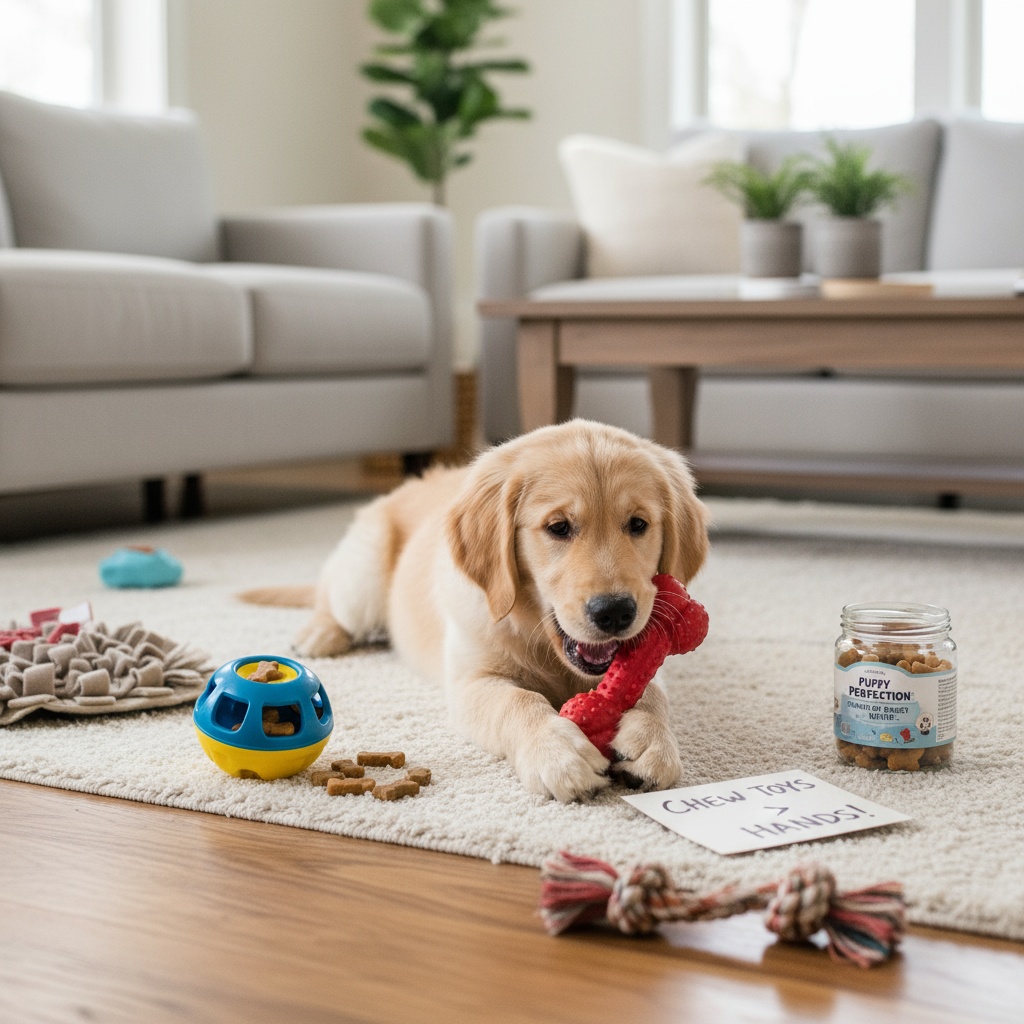
- Always keep a soft toy handy. When you’re playing and teeth start flying, swap your hand for the toy.
- Reward when your puppy chews the toy instead of you.
This teaches your pup that their toys are fair game, but people are not. Genius in its simplicity!
3. Practice Time-Outs
- If biting gets outta control, calmly end the game. Don’t shout or scare your pup—just stand up and walk away, or gently place your pup behind a baby gate for 30 seconds.
- Too long, and they forget why they’re on time-out. Too short, and it ain’t a consequence.
Consistency is everything in how to teach your puppy not to bite—do this every single time and they’ll get the message.
4. Reward Good Behavior
- When your puppy licks, sniffs, or plays gently, make a big ol’ fuss: snacks, praise, pets, the works.
- Good stuff should always get noticed. This is positive reinforcement 101!
The more you focus on what you want your puppy to do, the more you’ll see it!
5. Redirect with Training
- When your puppy gets excited and nippy, ask for a quick, simple command: “Sit” or “Down.”
- Reward calmness with attention and treats.
How to teach your puppy not to bite is sometimes just about switching their brain over to a more chill behavior.
Common Traps to Avoid
Let’s keep it real: teaching a puppy not to bite isn’t always smooth sailing. Here’s what NOT to do when figuring out how to teach your puppy not to bite:
- No hitting or shouting—it just scares them and might make things worse.
- No rough games (like hand wrestling)—this makes biting feel like a-okay play.
- No teasing your pup with hands or feet as toys.
- Don’t punish with isolation for long periods. Pups learn best through positive methods.
You don’t gotta be a pushover, but you don’t want your pup afraid of ya either.
How Long Does It Take to Teach Your Puppy Not to Bite?
Alright, real talk: teaching your puppy not to bite is not a one-day fix. On average, with dedicated practice, you’ll see big improvement within two to four weeks. Younger puppies are quicker learners when you’re consistent with how to teach your puppy not to bite. It’s def a marathon, not a sprint—don’t expect overnight results, but stick with it and you’ll have a polite pupper in no time.
What If My Puppy’s Biting Gets Worse?
If it feels like your training is going nowhere fast, check out these quick fixes:
- Add more exercise: A tired dog (esp a puppy) is a good one. Zoomies burn off excess bitey energy.
- Snuffle mats and puzzle toys: Challenge their brains, not your patience!
- Change the schedule: Sometimes biting is a sign they’re hungry or overtired.
- Is your pup teething? Give a cool, safe chew toy to soothe those gums.
Biting might get worse just before it gets better (hello, “extinction burst”!), so stay firm and positive—your pup will catch on!
Special Tips for Different Puppy Ages
- 8–12 weeks: Be gentle, but firm. Lots of redirecting, chew toys on hand 24/7. Gentle yelps.
- 3–6 months: More structure—basic training, short time-outs, consistent rules.
- 6+ months: Keep up the consistency. Start adding more advanced commands and practice calm greetings.
No matter the age, the principles of how to teach your puppy not to bite are always clear, calm, and kind.
When to Get Pro Help
If attempts on how to teach your puppy not to bite seem to hit brick wall after brick wall (like, you’re bleeding daily or pup is getting aggressive), time for a pro dog trainer or behaviorist. Sometimes puppy biting isn’t “just play”—some pups have real behavioral issues that need expert help.
Real Life Stories: How Owners Managed Puppy Biting
Case 1: The Gentle Giant
Laura’s 10-week-old lab was a real chomper, but after swapping out her hand for a chewy toy every time, plus lots of “ouch!” feedback, she saw a huge drop in nips after three weeks. She used short time-outs and praised like crazy for calm behavior—classic play-by-play of how to teach your puppy not to bite!
Case 2: The Herding Heeler
Max’s family was overwhelmed by their nippy Aussie’s herding instincts. They started structure training (“sit” to greet, “down” to calm), tried snuffle mats, and set up more exercise. Harmony restored, fingers saved!
Quick FAQs on How to Teach Your Puppy Not to Bite
- Is biting ever a sign of aggression? Rarely in puppies, but always look out for snarling, stiff body language, or biting hard to break skin. Call a trainer if you’re worried.
- At what age should puppy biting stop? Most puppies get gentle by six months, but keep reinforcement up for the first year.
- How to stop puppy biting feet, not hands? Stand up and ignore the behavior, give a toy, and practice calm commands. Repeat. Repeat more!
- Do certain breeds bite more? Yeah, herders and retrievers sometimes get extra nippy since they LOVE putting stuff in their mouth. Follow the same steps, but be extra patient.
Best Products to Help Teach Your Puppy Not to Bite
- Chew toys (KONG, Nylabone, soft plushies for teething)
- Puppy training treats (get small, tasty stuff for fast rewards)
- Snuffle mats and puzzle games (mental enrichment to tire them out!)
- Bitter spray deterrents (test first; some pups actually like the taste—go figure)
Puppy Biting and Kids: Keep the Peace
Kids and puppies are a dynamite combo, but… yikes, those tiny teeth! Teach kids:
- Never to wave hands near puppy’s face
- To keep energy calm around excitable puppies
- To use toys instead of hands when playing
- Not to yank away quickly—this can trigger more biting
Supervise all play until you’re 100% sure your pup is gentle.
Recap: How to Teach Your Puppy Not to Bite Like a Pro
- Start early, be consistent
- Substitute toys for hands
- Use positive reinforcement
- Use time-outs for hard nips
- Redirect energy with training and exercise
- Call a pro if things get outta hand
In the end, learning how to teach your puppy not to bite is just one step on the road to an awesome bond with your dog. Your pup is learning from you every single day, so keep those lessons gentle, fun, and packed with love! Soon enough, you’ll be high-fiving instead of bandaging bite marks. You got this, future dog whisperer!